Euro-Office Forks OnlyOffice: What It Means for Users
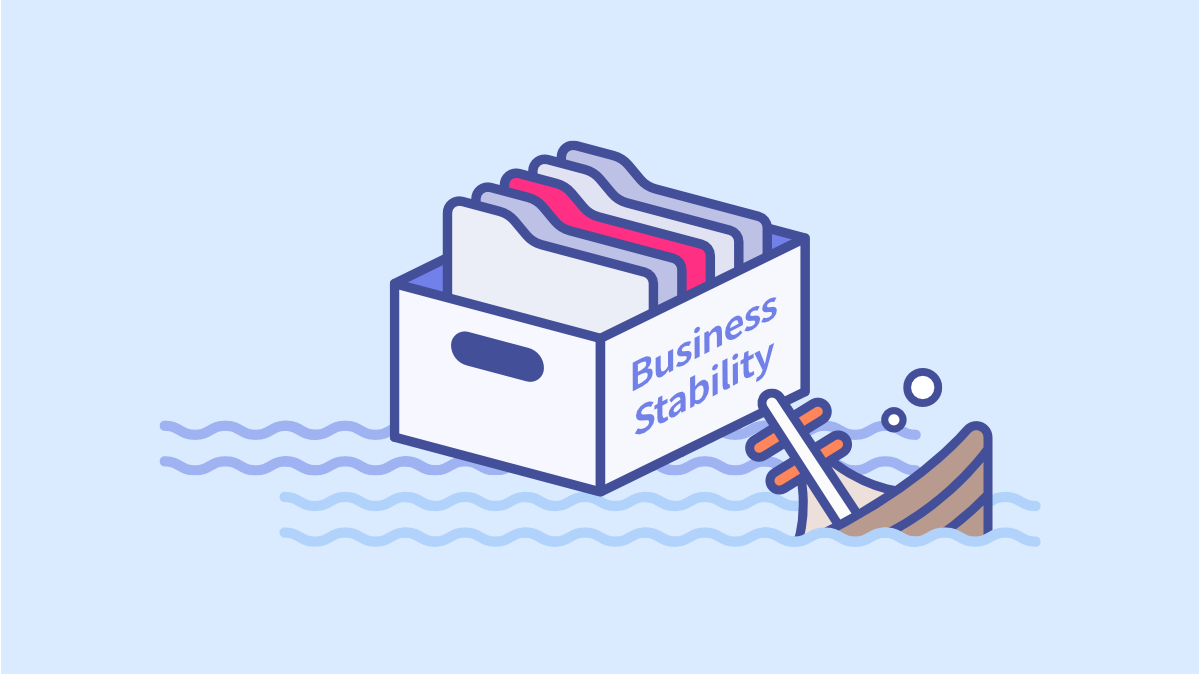
Community Fragmentation Should Not Result in Business Downtime
The web office ecosystem is experiencing continued division. An eight-year partnership ended in a legal battle within just five days. This incident serves as a warning for corporate IT infrastructure. Will the tools we use today still be available tomorrow? What does stability mean in the end?
In late March 2026, an announcement from Europe impacted the open source web office ecosystem. A group of European tech companies launched Euro-Office, a new product forked from ONLYOFFICE. Within five days, Ascensio System SIA, the developer of ONLYOFFICE, announced a license violation and started legal action. At the same time, another conflict is happening between The Document Foundation, which manages LibreOffice, and Collabora.
To be clear, these events do not simply point to the risks of open source. The freedom to fork, community-driven development, and open standards remain values worth preserving. The problem is in the business world. However, unpredictable community splits create structural risks for companies. When transparency, vendor neutrality, and continuous support are not in place, community disputes can become a direct source of operational risk for the businesses that depend on them.
The Five-Day Chain Reaction of Euro-Office
March 27
A group of European tech companies officially launched Euro-Office in Berlin. This product, forked from the ONLYOFFICE code, aims for a full release in the summer of 2026. Nextcloud, a member of the group, stated that the technical parts existed for years, but a primary effort to combine them was not enough.
March 30
Ascensio System, the developer of ONLYOFFICE, released an official statement alleging that Euro-Office violated license terms. The company contended that the removal of clauses regarding original logos and branding from the AGPLv3 constitutes copyright infringement. ONLYOFFICE released a legal opinion stating that the AGPLv3 must be accepted in full, including any additional conditions, and that partial compliance does not constitute a valid license.
March 31
ONLYOFFICE announced the end of its eight-year partnership with Nextcloud. This partnership allowed millions of Nextcloud users to edit documents through integrated features.
The Cause: License Interpretation Conflicts
The legal dispute focuses on Clause 7 of the AGPLv3. Since 2021, ONLYOFFICE has included requirements to keep original logos and blocked the use of trademarks in derivative works. Euro-Office argues that logos are trademark elements and can be removed. ONLYOFFICE says these terms cannot be separated from the license. According to Clause 8, removing them terminates usage rights. Bradley M. Kuhn, the original author of the AGPL license, has been cited as supporting the Euro-Office side’s legal position. No court ruling has been issued yet.
Why Euro-Office Chose to Fork
The Euro-Office group noted that many ONLYOFFICE developers are based in Russia. They argued this limits use by European public institutions. They also claimed that community contributions were ignored and some code was hidden, which made international cooperation difficult. These points reflect technical complaints and issues of geopolitical trust.
The Incidents That Have Already Happened Somewhere in Your Stack
The Euro-Office case is not a sudden event. Patterns of unpredictable governance and community splits have affected corporate infrastructure time and again.
When Governance Becomes Unpredictable
OpenOffice ↔ LibreOffice (2010)
Sun Microsystems, the developer of OpenOffice, was bought by Oracle in 2010. Concerns over technical policies under Oracle led developers to form The Document Foundation. They launched LibreOffice as a fork of OpenOffice. Companies using OpenOffice faced confusion. Facing uncertain support and updates, businesses had to choose between replacing their systems or keeping unstable tools.
MySQL ↔ MariaDB (2010)
The purchase of Sun Microsystems by Oracle also affected MySQL. Concerns about monopolies led the creator of MySQL to start MariaDB. Many companies using MySQL had to decide whether to stay or switch. This case showed how governance uncertainty could change the global IT environment.
CentOS 8 EOL (2020)
In 2020, Red Hat moved the end-of-support date for CentOS 8 from 2029 to late 2021. Companies that moved to CentOS 8 for its promised ten-year support had to move their infrastructure again. Businesses had to choose between other versions like Rocky Linux or switching to paid RHEL. For companies that had planned around a decade of support, the sudden change left little room to respond.
License and Partnership Disputes
Terraform ↔ OpenTofu (2023)
This conflict started when HashiCorp changed the Terraform license from an open source license (MPL) to a business source license (BSL). Developers who built businesses on Terraform reacted by creating OpenTofu. IT managers again had to choose: keep existing code or move to the new open source project.
LibreOffice ↔ Collabora (2026)
Collabora, a partner of The Document Foundation, provided a commercial product based on LibreOffice Online. In 2025, Collabora released a desktop version without the LibreOffice brand. In response, the foundation said it would resume development of LibreOffice Online in February 2026. Collabora called this move destructive, and the foundation took action by terminating the membership status of over 30 developers associated with Collabora. This event damaged a long relationship built on trust.
Shared Problems in These Cases
Comparing the Euro-Office case with these five cases reveals common issues:
- What risks come from division caused by distrust in governance? (OpenOffice/LibreOffice)
- Does the business keep control over its tools? (MySQL/MariaDB)
- How easily can supplier decisions break service continuity? (CentOS 8)
- How do conflicts over license interpretations split the ecosystem? (Terraform/OpenTofu)
- What crises do open source conflicts bring to business customers? (LibreOffice/Collabora)
When governance lacks stability and clear accountability, commercial and strategic risks grow. As these risks reach a breaking point, the damage falls on the companies using the tools and their customers.
Checklist: Solution Stability Audit
Use this list to check the office solutions your company uses or plans to buy. Check each item to help reduce risks after adoption.
1. Governance Transparency
- □ Are support policies and major changes clearly told to customers?
- □ Is the long-term survival of the operator confirmed?
- □ Is there a way for customer feedback to improve the product?
2. Geopolitical Risk and Data Sovereignty
- □ Is the developer’s location trustworthy for data sovereignty?
- □ Is document data handled in a way that meets local rules?
- □ Is the tool free from security risks or export restrictions?
3. License Stability
- □ Are the license terms clear?
- □ Does the tool advocate open standards like ODF?
- □ Is there legal protection and technical support during license disputes?
4. Partnership and Support
- □ Is the End-of-Life (EOL) policy predictable for a long time?
- □ Does the structure avoid relying on just one partnership for integration?
- □ Does the provider guarantee technical support and a clear SLA?
Scoring Results
- ■ 1–3: High exposure to major risks. Managers should review these items.
- ■ 4–6: Some risks exist. Review the missing items first.
- ■ 7–10: Most risks are managed. Review the remaining items too.
- ■ 11–12: All items are met. The current solution is stable.
Three Conditions: Is Your Infrastructure Sovereignty Safe?
The checklist above reflects an essential requirement. Software for corporate infrastructure must meet three types of stability.
- Technical Stability: Compatibility with market formats, support for open standards, predictable updates, and consistent features despite community issues.
- Compliance Stability: Low risk of license disputes, fulfillment of data sovereignty, and a legal basis for regulatory changes.
- Geopolitical and Organizational Stability: A responsible support system, a history of long-term operation, and a trustworthy developer location.
Few solutions meet all three. The Euro-Office case and the conflict between LibreOffice and Collabora show how the gap between reality and stability brings business risks.
A Global Concern, Not Just a European One
Yet the Euro-Office case is not just a European story. Because office software links to data, governance and stability are more important for managers everywhere. Gartner predicts global AI spending will reach $2.52 trillion by 2026. Meanwhile, spending on sovereign cloud infrastructure is expected to grow by 35.6% to $80 billion. Geopolitical tensions are increasing the demand for digital sovereignty. Governments across the Asia-Pacific, including Japan, South Korea, and Vietnam, are accelerating the development of comprehensive AI and data sovereignty laws.
In the end, one major question remains: “Who can guarantee the future of the office tools your business uses?”
Thinkfree Office: A Stable Alternative
Thinkfree Office is a product of Thinkfree, a subsidiary of Hancom Group in South Korea, with roots in the first web-based office editor. Since 1989, Hancom Group has maintained its own office ecosystem and built a position at the center of South Korea’s software history by competing directly against MS-Office dominance. As a web office product supported by an organization with over 30 years of experience in a major IT nation, Thinkfree Office is a strong choice.
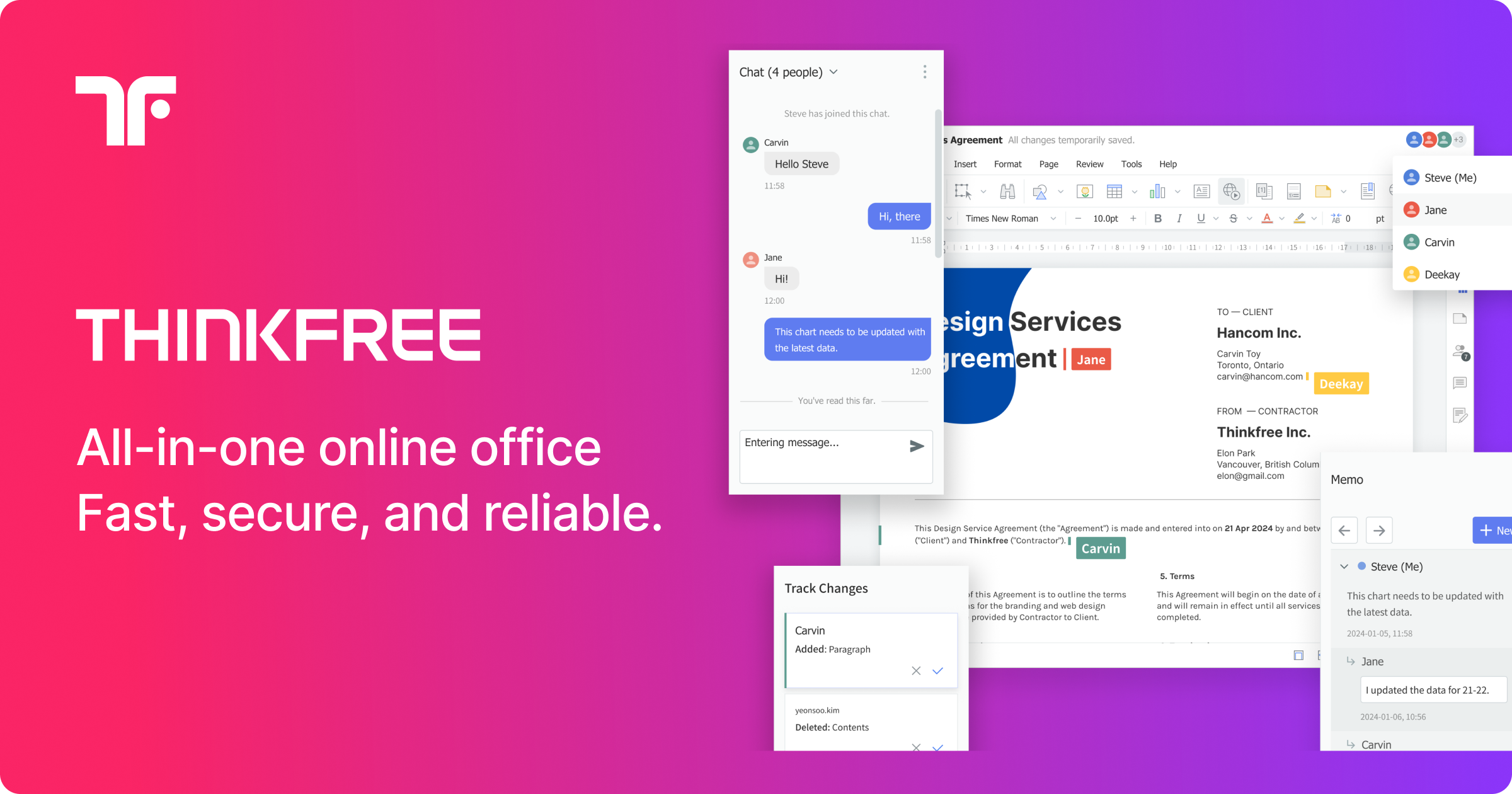
In addition, in 2021, the European Commission recognized South Korea as having data protection equal to the GDPR. This allows for the free transfer of data in the EU without extra safety measures.
Thinkfree Office ensures seamless MS-Office compatibility while supporting ODF to promote vendor neutrality. This commitment reflects our deep respect for the spirit of openness, a value shared across open-source communities and open-standard initiatives. For businesses, this openness works best when paired with enterprise-grade support and clear licensing terms. Under a commercial licensing framework, Thinkfree provides this balance of openness and stability, along with accountable technical support to our partners and customers.
Finding the Most Stable Fit for Your Business
Do not let community division cause trouble for your business. As the online office ecosystem continues to shift, Thinkfree Office is available as a stable, fully supported option today, including for teams already using Nextcloud.
If you are comparing office solutions, you can review a detailed breakdown of how Thinkfree Office differs from ONLYOFFICE in features and licensing. From there, see how Thinkfree Office meets the stability standards outlined above.
References
- Nextcloud Official Announcement (2026.03.27)
- ONLYOFFICE License Violation Statement (2026.03.30)
- ONLYOFFICE Partnership Termination Announcement (2026.03.31)
Like this post? Share with others!