
In February 2024 Atlassian announced the official end of support (EOL) for all Server products. At the time Atlassian advised customers to migrate to Atlassian Cloud or Data Center. Data Center was positioned as the official on-premises alternative for Server customers.
Yet about a year and a half later, in September 2025, Atlassian announced the end of support for its Data Center product line as well. In March 2026 new customer license sales and existing customer license renewals ended, and by March 28 2029 all Data Center licenses will expire and instances will transition to read-only.
For organizations operating enterprise environments this schedule is far from generous. It means planning, testing, validation and migration must all be completed within the next few years. Especially for organizations that must meet regulatory compliance or data residency requirements, this situation cannot be resolved through a single standalone project.
Atlassian is not alone in this transition. Around the same period Microsoft also announced the end of support for Office Online Server (OOS) which is an on-premises web office solution. OOS was also a solution primarily used by organizations such as government agencies and regulated industries that found it difficult to utilize external cloud services and data hosting.
Placing these events along a single trend naturally leads to a few questions. Why are major enterprise software vendors increasingly reducing their on-premises product lines? And if not all organizations can adopt a cloud-centric model, what deployment options will remain available to them?
What makes this development particularly notable is that Atlassian stated as recently as 2022 that it had no plans to retire Data Center. Not only was it officially presented as an alternative to Server but until July 2025 Atlassian announced a strategic initiative to enhance scalability and improve search functions for Jira Data Center as part of the OpenSearch project. However, the Data Center EOL announced just a month and a half later illustrates how quickly long-term product commitments can change when vendor priorities shift.
The rationale behind the decision is relatively clear. Atlassian explained that 99% of its more than 300,000 customers are already using Atlassian Cloud or are on a migration path to Atlassian Cloud, and that nearly all new customers are choosing Atlassian Cloud. The company positioned its cloud platform as the primary environment for delivering future innovations, including AI-powered capabilities and enterprise-wide search. Microsoft also cited the difficulty of maintaining on-premises products while integrating rapidly evolving cloud-based AI capabilities as a key reason for ending OOS support.
This is a decision tied to the vendor’s business strategy rather than simply a shift due to technology trends. For vendors, a Cloud-First strategy can provide significant operational advantages in many aspects such as applying security patches, updating features and integrating AI services. And it is also true that many organizations today are successfully migrating to the cloud in line with this trend.
However, the challenge is that these vendor strategies do not always align with the operational realities of all organizations. While a vendor’s Cloud-First strategy offers more choices to some organizations, others still require self-managed and customer-controlled deployment models.
Therefore the real issue is not cloud adoption itself. It is whether organizations retain enough deployment optionality to align infrastructure decisions with their operational and regulatory requirements.
The infrastructure operating environments required by companies vary. However as the overall market converges in a specific direction organizations with diverse requirements can be exposed to new risks.
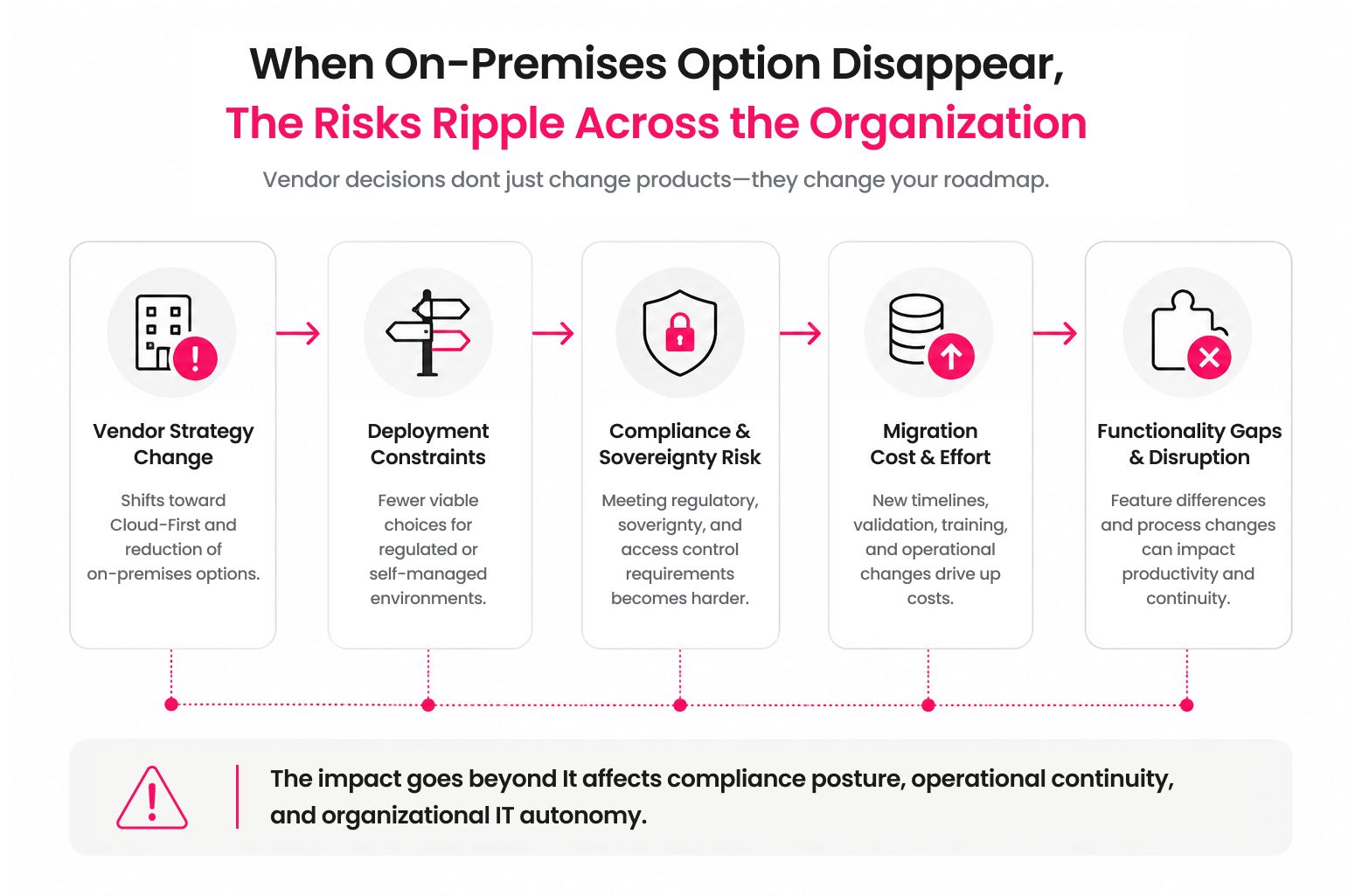
The reason companies chose Data Center environments in the past was not simply because of cost. Various considerations drove those decisions, including data sovereignty, access control, and extensive customization needs. Even if they fully understand the benefits of the cloud, some organizations cannot easily change their deployment methods due to data sovereignty and access control requirements.
Institutions in finance, healthcare, law, defense and government are particularly constrained when determining infrastructure operating methods due to data sovereignty and compliance requirements. In these sectors cloud migration is not a technical decision but a matter of regulatory risk management.
The Server, Data Center and OOS cases convey the same message. The more deeply you rely on a specific vendor’s deployment method, the more that vendor’s strategy changes can affect your entire organizational IT roadmap. Just as today’s policies cannot be guaranteed to remain tomorrow, promises to maintain support can also be modified according to changes in vendor strategy.
In complex enterprise environments cloud migration entails significant time and costs. Organizations must account for compliance reviews, security validation, internal stakeholder alignment, and operational process changes. Especially considering that Data Center was the recommended alternative during the Atlassian Server EOL, some organizations that completed the move to Data Center may now face a situation where they must undertake a new transition project again.
Not all cloud migrations guarantee the same results. In some cases the features or operating methods used in existing self-hosted environments may not transfer over exactly. This was also an actively discussed point within the Atlassian community at the time of the EOL announcement.
The core issue this case demonstrates is not a problem with a specific product, but rather the risk inherent in relying too heavily on a single vendor stack for the entire enterprise environment. When all layers depend on a single vendor, shifts in that vendor’s strategy can ripple across the entire IT environment.
One possible approach is to view the collaboration environment as a set of distinct layers rather than a single platform. Not every layer of the collaboration environment needs to be managed in the same way. Some organizations may put project collaboration in the cloud, while document and file storage may need to be kept in a separate environment due to regulatory requirements.
The elements to consider by layer also differ as follows.
Layer | Key Features | Factors to Consider |
|---|---|---|
Project Collaboration | Issue tracking, task management | Workflow customization, audit log requirements |
Knowledge Management | Wikis, internal documentation | Access control for internal information |
Document Collaboration | Document creation, co-editing, review | Format compatibility, regulatory requirements |
Drive, version control | Not supported | Data residency, retention policies |
Which of these layers to manage as a priority depends on the industry, security policies and regulatory requirements. In the financial and public sectors file storage location and access control will be the top priorities. In manufacturing, version control and protecting design documents from unauthorized access or disclosure become important priorities. The value of the layer separation framework lies in allowing this judgment to be made based on the organization’s own risk priorities rather than the vendor’s roadmap.
However the layer separation framework is not an immediate, clear and simple solution. Implementing this framework introduces distinct technical burdens, including SSO and authentication integration, cross-layer data pipelines and increased operational complexity. Therefore compared to a situation where the entire organization is affected by changes in a specific provider’s product roadmap, deciding where to absorb that complexity is becoming one of the defining questions in enterprise IT architecture today.
For some organizations they may have already concluded that a specific layer at least cannot be moved to the cloud. In that case, a more practical question emerges. Are there enough viable alternatives to support that decision?
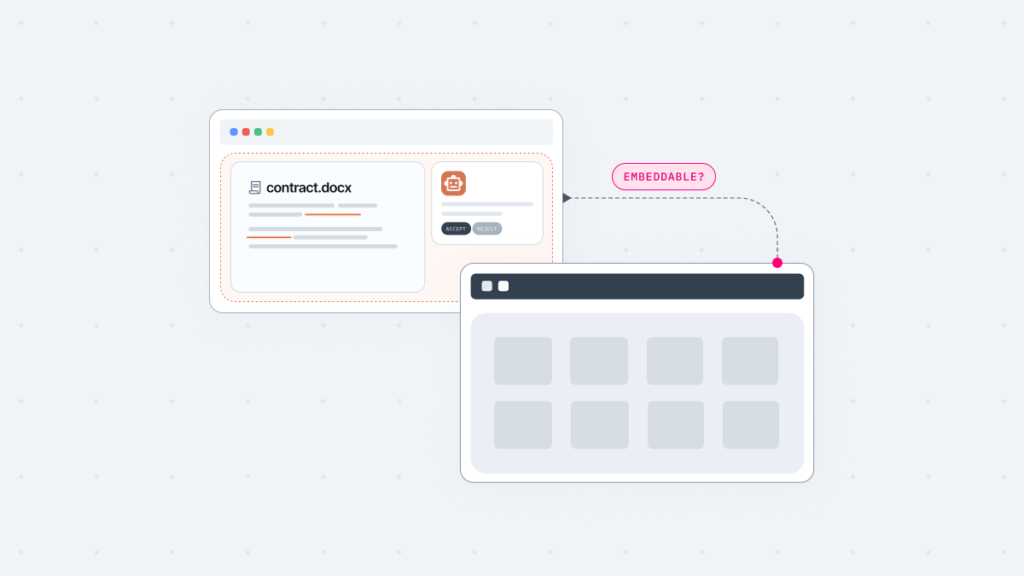
One area where this challenge becomes particularly apparent is the document collaboration layer. Choices are often perceived to be limited, and the requirement to simultaneously meet browser-based real-time co-editing, MS Office format compatibility and on-premises/private cloud deployment capabilities has become even more prominent among organizations experiencing challenges after the OOS EOL.
The Cloud-First strategy is highly likely to continue in the future. And for many organizations this will clearly provide benefits. However organizations that must directly maintain operational responsibility for specific systems according to regulatory, security and data governance requirements will also continue to exist. Therefore, organizations should focus less on cloud adoption itself and more on whether they retain the deployment optionality required by their operational realities and regulatory environments.
Organizations evaluating on-premises or private deployment options for document collaboration should consider both browser-based editing capabilities and operational flexibility. Thinkfree Office and Thinkfree Drive are among the solutions that can be evaluated as part of that assessment.
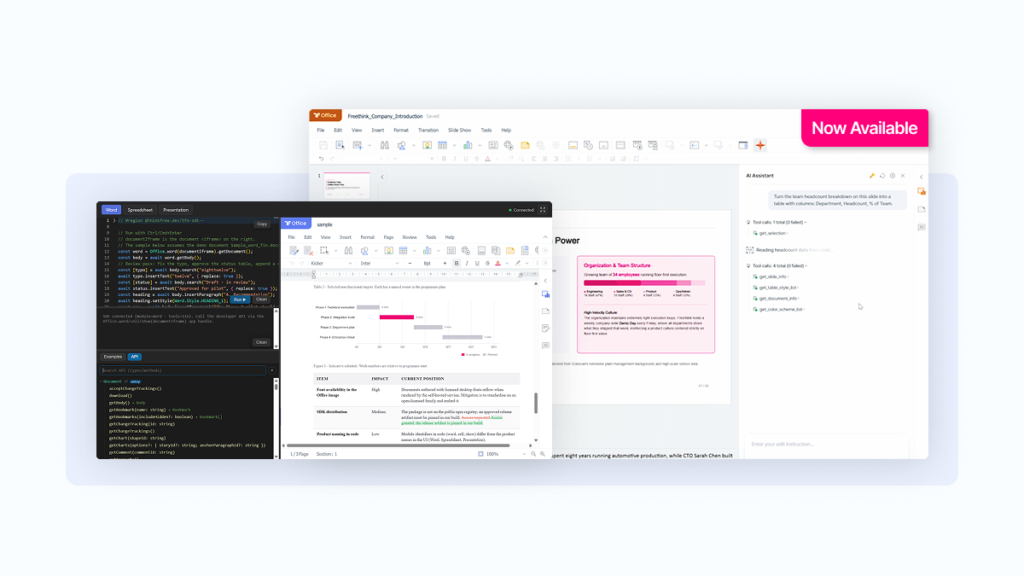
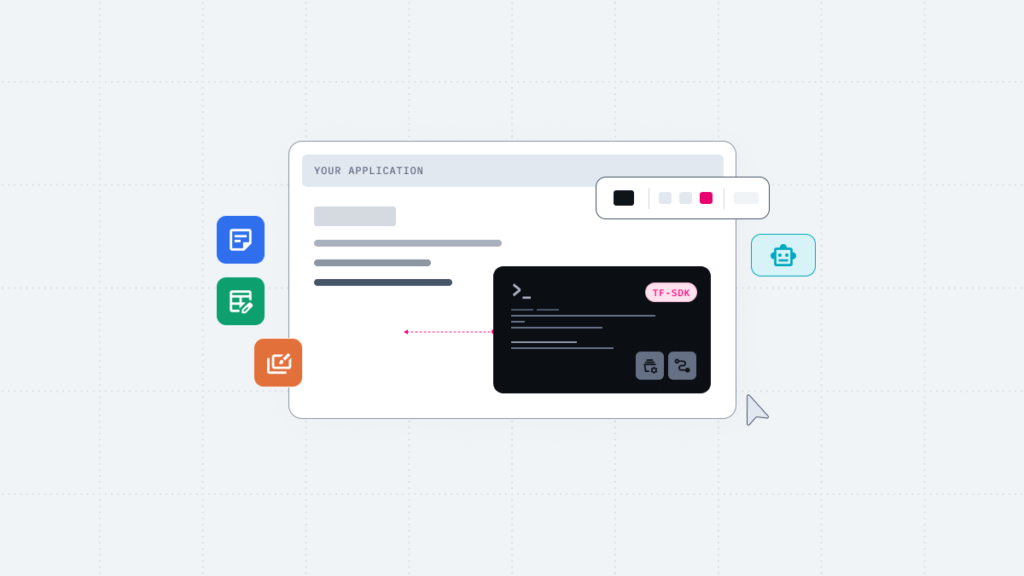
Thinkfree Office is now offered as Thinkfree Document Editor SDK for embedded document editing, object-level APIs, and AI agent integration.
Thinkfree Drive is now offered as Thinkfree Document Management SDK for document versioning, permissions, metadata, search, locking, and lifecycle management.
End of support means Atlassian will no longer provide new licenses or renewals after the announced dates, and by March 28, 2029, all Data Center instances will become read-only. Organizations that continue to rely on unsupported environments may face increasing operational, security, and compliance risks as the deadline approaches.
Not necessarily. A practical approach is to treat the collaboration environment as separate layers, such as project collaboration, knowledge management, document collaboration, and file storage, rather than as a single platform. Some layers may fit a cloud-first strategy, while others, particularly document collaboration, may still require on-premises or private deployment to meet regulatory, security, or data sovereignty requirements.
Beyond the technical migration itself, organizations should assess data sovereignty and compliance requirements, dependency on a single vendor’s roadmap, migration cost and complexity, and whether existing functionality will carry over to the new environment.
Document collaboration often has more demanding requirements for formatting fidelity, real-time co-authoring, governance, and regulatory compliance than other collaboration workloads. Treating it as a separate layer allows organizations to choose the deployment model that best fits their requirements.
Solutions such as Thinkfree Office and Thinkfree Drive support this approach by enabling organizations to keep document collaboration on-premises or in a private cloud while other collaboration services move to the cloud.
Like this post? Share with others!