
Generating legal text with AI is not the same as producing a defensible, business-ready document. This article covers what legal document automation requires beyond drafting: format fidelity, data sovereignty, and audit governance.
If your legal team uses AI to draft contracts or other legal documents, this risk may already exist within your workflow.
The February 2026 decision in United States v. Heppner raised an important question about how AI is used in legal practice. Materials created and transmitted through public AI platforms may not be protected by attorney-client privilege or the work-product doctrine. This shows that entering information into a public platform can weaken any reasonable expectation of confidentiality.
This ruling matters because it shifts the debate away from whether companies use AI in legal work and toward how, where, and under what controls they use it. Those factors can determine whether legal protections apply. The question now is whether your legal AI workflow reflects the lessons of this decision.
Generative AI has accelerated legal drafting, legal research summarization, document review, and other workflows commonly associated with legal document automation. According to Thomson Reuters, use of generative AI in legal work rose from 14% to 26% year over year in 2025. Market research firms have also projected strong compound annual growth rates for the global legal AI software market.
Even so, key practical problems remain. First, even when AI successfully generates text, substantial manual rework is often required before it becomes a production-ready legal document. Complex clause numbering systems, embedded tables, exhibit forms, and jurisdiction specific filing formats create barriers that AI outputs do not automatically overcome.
A second issue, highlighted by the Heppner decision, is that where and how a document was created or stored can directly affect legal defensibility.
The Heppner ruling rejected privilege protection on three grounds.
In short, privilege protection depends on AI use happening under a lawyer’s direction and within a structure that preserves confidentiality. If data are routed through external servers, many AI services may carry significant risk.
But organizational preparedness for this risk remains limited. Thomson Reuters reported that in 2025, formal generative AI policies were lacking or unknown to 59% of law firms and 45% of corporate legal teams.
The technical starting point is straightforward. Data must not leave the organization’s controlled network. Yet controlling data paths alone does not eliminate risk. The trustworthiness of the AI output itself is also a potential liability.
In law, almost correct can be as harmful as plainly wrong. The AI Hallucination Tracker recorded more than 1,500 cases by May 2026 in which AI hallucinations produced false cases, spurious citations, or non existent statutory text. A single outdated provision or a missing jurisdictional notice can trigger delays, disputes, or sanctions.
Even when the substance is accurate, broken formatting creates procedural risk. Court filings require jurisdiction specific margins, fonts, and page settings. If numbering schemes or table structures collapse, internal cross references may break.
Therefore, hallucination and format failure share the same requirement. AI output must be delivered as an immediately editable legal document. Before worrying about where the document is stored, this basic requirement must be solved.
Cross-border data regulation adds complexity to legal AI adoption, and for global enterprises or law firms handling international matters, data sovereignty is becoming an important compliance consideration. The GDPR can apply to the processing of EU residents’ personal data even when data is stored outside the EU, and the EU AI Act introduces additional compliance obligations for certain high-risk AI systems.
Other jurisdictions are also tightening data transfer and localization requirements. For example, China imposes cross-border transfer requirements under the Personal Information Protection Law, while Russia applies localization requirements to certain categories of personal data.
It is important to note that data sovereignty and residency are not the same. Even if servers are located in the EU, access by personnel elsewhere can create a cross-border transfer issue. Server location alone does not guarantee compliance.
For responsible AI use in law, privilege protection and data sovereignty must both be satisfied. That means the document lifecycle from generation to storage should be completed within infrastructure the organization controls.
Generating text alone is not enough. The document formatting layer must be solved before lawyers can immediately review and edit AI-generated output.
Therefore, AI outputs should meet the following requirements.
Thinkfree Document Editor SDK is a document automation engine designed to bridge this gap between AI-generated text and production-ready legal documents.
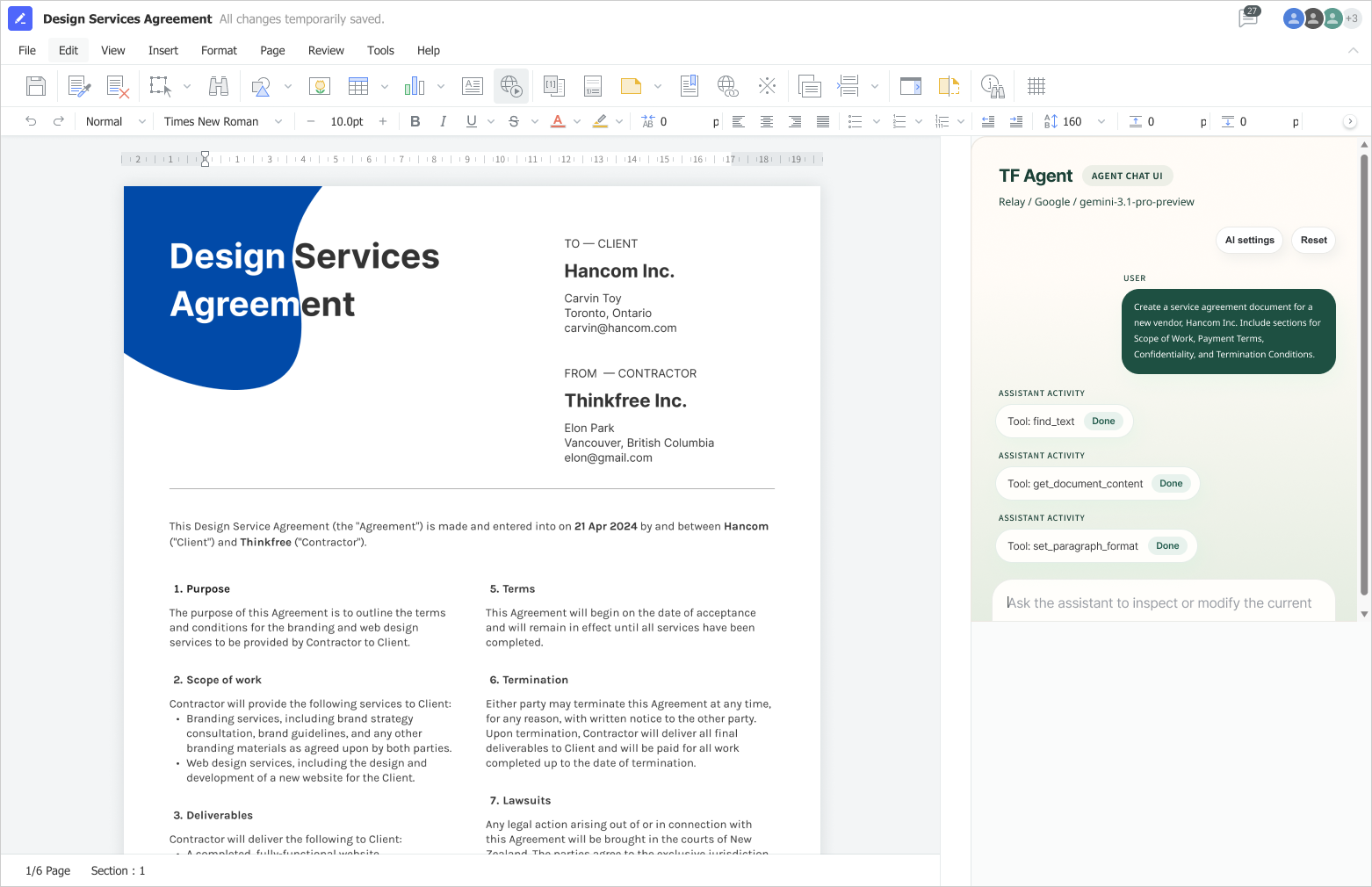
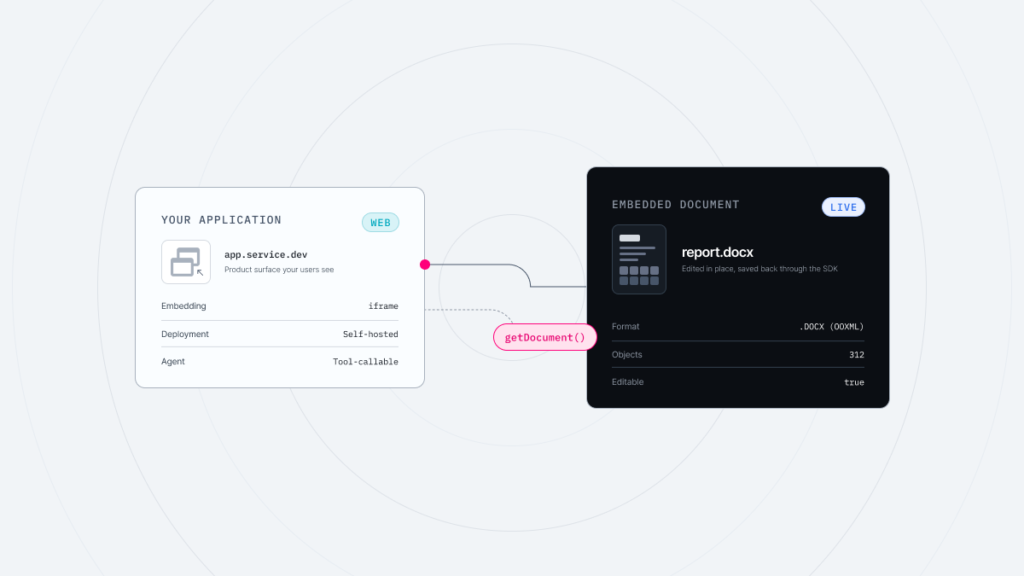
Because it can connect to an organization’s existing LLM and AI infrastructure, it preserves the document layer when platforms change. Running in a self hosted environment, it allows data to remain on the organization’s servers. As user commands are executed into Office editing flows, the SDK leverages over 25 years of office software experience to preserve numbering, tables, and signature fields from the generation step onward. As a result, lawyers can focus on substantive legal review rather than document reformatting, allowing final documents to be exported immediately in MS Office and ODF standard formats.
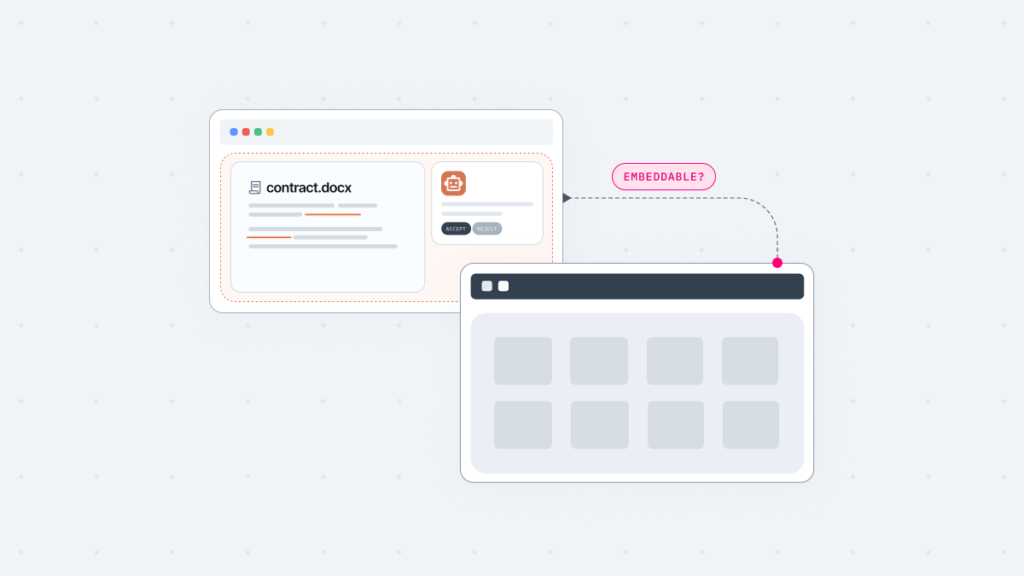
For teams building or operating legal specialized AI platforms, another concern is development cost. Converting AI output into fully editable Word documents requires significant engineering effort across format parsing, rendering consistency, and version compatibility management. Thinkfree Document Editor SDK can be embedded as a white label component so vendors can deliver document generation and editing layers within their products without heavy development effort.
After document generation comes document management. If AI generated documents are stored in external SaaS document management systems, privilege risks can reappear. Legal document management should therefore also occur within an organization’s controlled environment. Essential capabilities include the following.
Thinkfree Document Management SDK meets these needs while enabling organizations to run storage on their own infrastructure.
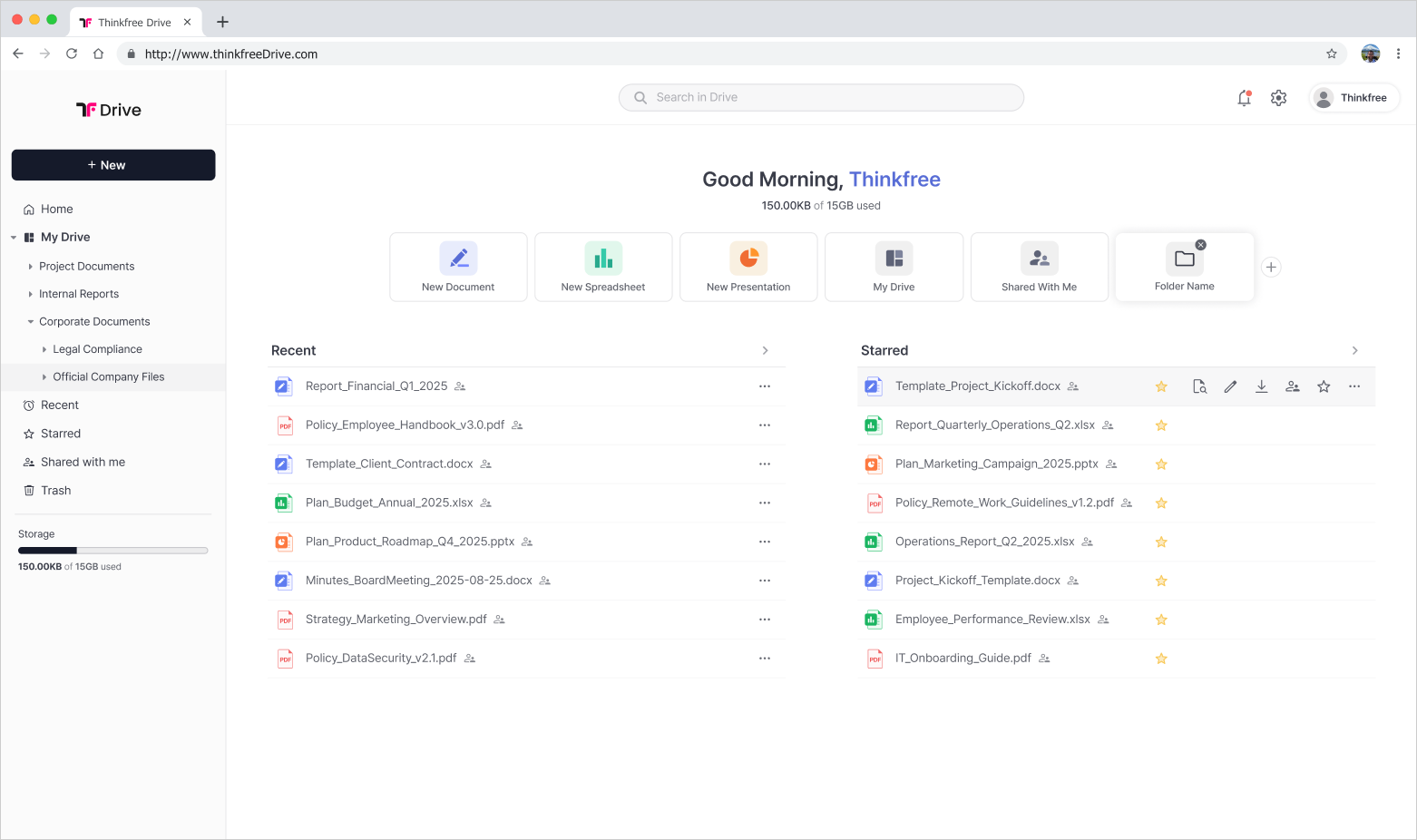
It includes an office engine, so documents can be previewed and edited directly at the storage layer. It also preserves edit and version histories and allows access permissions to be customized in detail. Because it can run in the same on-premises environment as the AI Web Office SDK, it creates a continuous chain from document generation through storage while keeping data within the organization’s controlled network.
Many organizations focus on finding a stronger model when they design legal AI strategies. However, the completeness of legal document automation depends less on the model itself than on the overall workflow. The real competitive advantage in the era of legal AI lies in how reliably an organization can control the entire chain from document generation through storage and governance. That control is now a necessary condition for legal defensibility.
Legal document automation uses software and AI to streamline the creation, review, editing, approval, and management of legal documents. Rather than automating only document drafting, modern platforms support the entire legal document workflow while maintaining accuracy, consistency, and compliance.
Yes. Thinkfree’s SDK is designed to integrate with existing legal software, legaltech SaaS platforms, CLM systems, and enterprise workflows. Organizations can embed document creation, editing, and AI-assisted drafting into their current applications without rebuilding or replacing existing infrastructure.
Yes. Thinkfree Document Editor SDK supports self-hosted deployment, allowing organizations to align document automation with their security, compliance, and data residency requirements.
Yes. Thinkfree Document Editor SDK combines AI-assisted drafting with a full-featured document editor, allowing legal teams to review, revise, comment on, and finalize documents within the same workflow while maintaining formatting and document integrity.
Like this post? Share with others!